Friday, August 28, 2020
They're the parents of a player...
They're the parents of a player. You'll recognize them because they're the ones carrying umbrellas, rain ponchos, winter coats, a big Thirty-One bag full of blankets, and enough money for the entire family to stuff themselves on popcorn and Spanish hot dogs and nachos because there wasn't enough time for supper before the game.
They bring the weather gear even on a clear night, you'll notice, because although clouds may burst with bucketfuls of rain or snow or both, the parents won't have the option of going home or even to the car. It doesn't matter if everyone else leaves the stands--as long as the players are on the field, their parents are in the bleachers.
She's the mother of a player. You'll recognize her because she's the one whose chin wobbles and whose eyes get big when someone screams at the player she belongs to. She's the one who only claps politely when her son's name is called in the team lineup because she doesn't want anyone teasing her about being unduly biased.
She's the one who, when her son does something wonderful on the field, comes completely unglued and spills popcorn and extra blankets all over the people below her on the bleachers as she jumps up and down and screams, "Way to go, honey!"
She's the mother of a player. You'll recognize her because when a player is down, regardless of who it is, she grows silent and covers her mouth with her hand and swallows hard. She's the one who says, "Is he all right? Is he getting up?" in a whisper heard all around. She's the one who, when he gets up and is fine, is first to clap her hands and laugh breathlessly and shake the fearful moisture from her eyes.
She's the mother of a player. You'll recognize her at the grocery store at five in the morning in her sweats buying food so her son can eat in that twilight time between school and game that is is own. She's the one who has washed uniforms 10,000 times and would cheerfully wash them 10,000 more if it will only keep the player safe.
He's the father of a player. You'll recognize him by his hat. It will have his son's team name on the front above the bill and a number stitched somewhere over his ear. It's a silent advertisement that says, "I'm his dad."
He's the father of a player. You'll recognize him because he's the guy working in the concession stand and craning his neck to see over the customers' heads. He will interrupt his "Can I help you?" spiel with a banshee yell of, "THAT'S IT! THAT'S IT!" and then go on as if nothing had happened. But he'll be smiling real hard.
He's the father of a player. You'll recognize him as the man in the bleachers who doesn't yell very much and never criticizes a player who is not his own. Mistakes make him angry, but someone else drawing attention to those mistakes makes him angrier.
He's the father of a player. You'll recognize him by the blaze of fierce pride that crosses his face and by the look of pain when the kid blows it. Every parent knows that expression of agony--it's the one you wear when you'd like to draw all your child's pain into yourself so he wouldn't have to feel it. Ever.
They're the parents of a player. On Senior Night, she'll be the one with a rose and he'll be the one with his chest puffed out. And their good cheer and enthusiasm on Senior Night will seem a little quiet, a little forced, because they know it's nearly over.
They know they'll soon be able to eat regular meals on Friday nights. That they'll no longer have to spend money on things like football packages and special shoes and funny gloves. That they won't have to sit on wobbly bleachers at away games and listen to announcers who can't pronounce their son's name.
They know the extra blankets and weather gear can go way to the back of the closet and they've probably bought the last bottle of rubber cement necessary for the scrapbook.
Pretty soon, they won't be reading Saturday morning's newspaper before the ink has completely dried and sitting at the kitchen table to listen to "Coach's Corner" on the radio. And they'll be envying the parents of underclassmen who play the game because they get to do it all again next year and maybe the year after.
They're the parents of a player. You'll recognize them because they're always there. Always.
Friday, August 21, 2020
One of Theirs by Liz Flaherty #WindowOvertheSink
It's not a surprise that I love teachers--two of my kids teach--and the 20 books and all the columns I've written over the years are, at the end of the day, because my teachers all that time ago told me I could. Thank you to them. Again and again and again.
We were in a coffee shop one night when I heard Barb See, a retired teacher, ask, “Where’s my Skyler?” about our grandson. He’s 22 now and graduating from Ball State this weekend with a commission in the U.S. Army, but he’s still one of hers.Saturday, August 15, 2020
Messenger and Servant by Liz Flaherty #WindowOvertheSink
The Letter
Messenger of Sympathy and Love;
Servant of Parted Friends;
Consoler of the Lonely;
Bond of the Scattered Family;
Enlarger of the Common Life;
Carrier of News and Knowledge;
Instrument of Trade and Industry;
Promoter of Mutual Acquaintance;
Of Peace and Goodwill,
Among Men and Nations.
– Charles W. Eliot
I worked for the USPS for 30 years, driving the 27 miles to Logansport every day. When I first started, I made the drive six or seven days a week, sometimes twice a day. It was a good job. Every day I didn't hate it, I loved it. I was tired a lot. I worked hard. Most of us did. Most of the ones who are there now do, too.
Working for and with the public does give you certain privileges not everyone has. Customers were mostly kind, especially the regulars, who understood that sometimes there were lines and we couldn't make them move any faster than they did. They were friendly, helpful to each other, snickering together when one of the people in line would have a long cellphone conversation at the top of his voice. The post office was a neighborhood place.
I remember telling someone once that I was sorry we couldn't provide the service he needed. He said, "I'll bet you are, b****," on his way out. Not quite to my face. I remember the woman who wouldn't take my word for what I'd told her and asked me to ask "the man at the other window." So I did. He asked me what to do. I told him what I'd told her and he told her the same thing in turn. He knew the answer, but he wanted her to understand that I did, too. I appreciated that. I remember the people who came in at 4:59 knowing full well we closed at 5:00 with 15-minute transactions just because they could. I remember all the people who said, along with a shaking finger in my face, "I pay your salary!"
Those were the ones who expected favors. Who wanted postal workers to back-date their tax forms, who wanted to pick up the mail because they were expecting a check, who wanted us to wait for them at the back door because there weren't lines there and, you know, their time was valuable; no one else's was. There were politicians who expected special favors because "do you know who I am?"
But most customers were just you and me. They gave Christmas gifts to their carriers, bottles of water in summer, offers to "step inside and warm up" in the winter. I carried a city route once and stepped out of the postal car to a posse of little boys who wanted to know who I was and "what are you doing with Mr. Wilson's car?"
For all the years of my life--and I remember when stamps were three cents--people have complained when the prices went up. My mother was livid when postage went to a nickel. I recall hating 13 cents because I thought it was a stupid number; why not go to 15 and leave it there for a while? Build up some money.
When I worked there, of course, I found out what I always really knew, which is that the USPS isn't supposed to make money. It's supposed to provide a service. It's supposed to deliver millions upon millions of pieces of mail every single day. If you're required by your insurance company to get mail order prescriptions, they deliver them. No matter where you live or how valuable your time is. And you don't matter any more than anyone else, no matter who you are. Or less. You don't ever matter less, either.
The USPS is so far from perfect that it's not even within the same ballpark with the word. I'm not trying to say it is. What I'm trying to say is that it's a valuable service provided by a dedicated work force. If you don't use it or you don't think it matters, that's fine--you're definitely entitled to believe what you wish; however, please give consideration to the millions of people who DO use it. Give thought to the people who need those prescriptions, who count on letters and greeting cards, who'd rather their bills came in paper, who don't have all-electronic access. Who just like the post office.
Thanks for listening. Buy some stamps and send someone a letter--they'll love it. Have a great week. Stay safe. Be nice to somebody.
Saturday, August 8, 2020
Snapshot! by Liz Flaherty...with a little help from her friends...
We went to hear music at Black Dog Coffee last night, one of our favorite things to do and something we've missed so much during Covid's long sojourn with us. We stayed fairly distant, masks either on or ready to put on, and got to share music and conversation and memories with friends.
We've made so many of those memories together, although not being a musician gives me a different perspective than the others have. While my recollections are more likely to be formed around different criteria than theirs, we all have them.
Sarah and Ron Luginbill, with some beautiful violin help from their daughter Lita, sang mostly old songs last night. Ron kept the audience informed as to when the songs were recorded and by whom--and he was always right. I could have sworn "At Seventeen" came long before 1975--I'm glad I didn't argue that point.
We talked about the memories we got from music. And how it's not just the music you remember. It's where you were when you heard it, who you were with, what the weather was like. And how it made you feel.
"It's a snapshot," said Mike Almon. "You should write that."
I'm limited this morning by my own memories, but I'd love to hear yours.
Sarah sang the Beatles' "Paperback Writer" last night. It was nowhere near my favorite Beatles song (that's another column--or maybe a series), but I remember sitting in the car--although not which car--and listening to it and wishing so hard that could happen for me. I wasn't happy with who I was then--who is when they're 16?--and I didn't really believe dreams came true.
Mike Almon always ends his concerts with Harry Chapin's "Cats in the Cradle." Duane and I weren't very long into our journeys as parents in 1974, but the song's lyrics resonated even then. Every parent ends up with regrets, being sorry for times wasted, things said and things not said. But none of us are ever sorry for the time spent on bleachers, one-on-one time in the car, or just sharing the same air as our kids.
June Zinn, who plays the flute, talked about a song she used to play with Steve "Bear" Pochi, a much beloved friend who's no longer in the circle of chairs musicians seem to gravitate to no matter where they are. She can't think too much about the song, or about its lyrics, or she can't play it anymore. Her eyes welled up when she talked about Steve. Memories.
There are songs that Ole Olsen players sing in musical reviews that go so deep into their hearts that if you're watching them sing, you feel what they're feeling. When Kelly Makin starts "At Last," I sit up straight and listen, simply because of the power and the emotion that come from the stage.
It's a lot like, for those of our generation, remembering where you were when President Kennedy died. Remembering later, when Alan Jackson sang "where were you when the world stopped turning" and we all knew and felt again that September morning. The emotion is so deep I can't begin to describe it.
I don't think I've said this very well, and I'm sorry for that. Let me say again, I'd love to hear your memories. And how they made you feel.
Have a great week. Stay safe. Be nice to somebody.
Saturday, August 1, 2020
Fiction, facts, and the virus... by Liz Flaherty #WindowOverthSink
About writing. And the virus. And fiction. And real life. And facts.
I'm glad I write fiction as opposed to true-life, because fiction is negotiable. It's pliable and you can be assured of a happy ending. Although you're led by the characters you write, in the end the pen is still in your hand.
Another thing about writing fiction is that one of its primary rules is that you check your facts before you put them on paper. If you're going to mention someone having six heart bypasses (which I did), you need to make sure it's a possibility. If your hero in 1865 is going to be singing "Little Brown Jug," he needs to reconsider--it hasn't been written yet. If you're writing about the Revolution, don't use the word mesmerize--no one did until 1829.
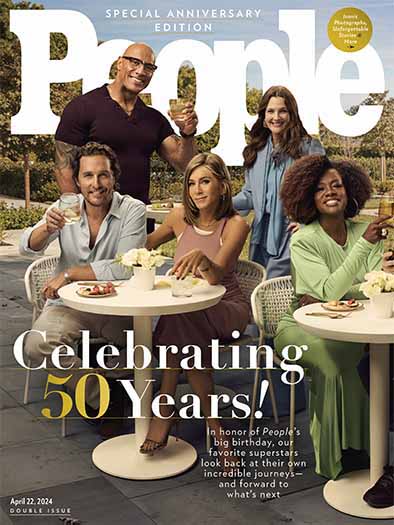
There's more than one reason to be careful with facts in fiction. One is that you can be sued for defamation. Another is that many readers believe if something's in print, it must be true. (You can mess with that statement a lot. If it's on Facebook...if it's in the National Enquirer...if it's on YouTube...or my own choice--if it's in People...)
Unfortunately, there are too many pens in too many hands in the virus, aren't there? Too many "if it's in..." quotations.
Another facet of writing fiction is characterization. The better you are at it, the better your stories are. If you have a bad guy, you need to make sure he's not all bad, or the reader can't sympathize with him. If you have a hero and/or a heroine, you need to give them flaws so that the reader can be him or her. (I'm always relieved when a heroine has bad hair and some extra pounds.)
All fiction stories have an arc that shows the growth of the story's protagonists from start to finish. Of course, the arc more often looks like a roller coaster, because it swoops up and down and goes in loops and occasionally goes completely off the rails, but, when you're coming down that last screaming drop, it's still an arc. The thing to do is not quit in the middle or there you'll be. Just hanging there, not sure whether to believe YouTube or science, this doctor or that one, a Facebook meme or a journalist.
We can't quit in the middle--I still have grandkids to watch grow up so that I can take the credit for what fine people they are, don't you? We need to continue to search out the truth, to do our best to take care of others (whether we like them or not, no matter who they voted for), and to be really careful of what sources we quote from. I love People. It's probably my favorite "social media," but it doesn't pretend to be science. I love YouTube, too--it's where I listen to music. (And sing along, although, like I said above, I really shouldn't.)But if I quit reading in the middle, before I've looked at other sources and weighed them out, I shouldn't quote anything I've seen. I can't do that as a fiction writer; I most certainly should not when it comes to true-life.
Have a great week. Stay safe. Be nice to somebody.
-
"A word is dead When it is said, Some say. I say it just Begins to live That day." Emily Dickenson As a writer, words are some o...
-
My mom always had a few pairs of new socks tucked back somewhere for unexpected guests at Christmas. I was embarrassed by that, as I thought...